
Energy-Saving VRV/VRF Air Conditioning Systems for Large Buildings
In large buildings or factories, conventional air-conditioning systems can consume a significant amount of energy and resources. The VRV/VRF air-conditioning system was developed to address this issue. It is a high-efficiency centralized system designed specifically for large buildings and multi-zone areas.
This article will clearly explain what VRV/VRF systems are and how they work, including their advantages and disadvantages, the energy savings they provide, their suitability for different types of buildings, and a comparison with other types of air-conditioning systems.
What is a VRV/VRF Air Conditioning System?
The terms VRV (Variable Refrigerant Volume) and VRF (Variable Refrigerant Flow) actually refer to the same system. VRV is a name used by certain manufacturers, while VRF is the internationally recognized term for this type of air-conditioning system.
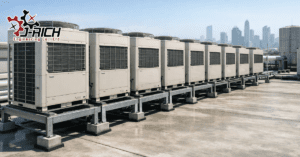
A VRV/VRF air-conditioning system uses a single large outdoor unit (condenser) to provide cooling, distributing refrigerant to multiple indoor units installed throughout different areas of the building.
What makes this system unique is its ability to automatically adjust the amount of refrigerant flow to each indoor unit according to the cooling demand of that specific area. In other words, each zone of the building receives precisely the cooling it needs — all from a single central outdoor unit.
How VRV/VRF Air-Conditioning Systems Operate
The operation of a VRV/VRF system relies on adjusting the amount of refrigerant delivered to each area in real time, based on the temperature detected in each room.
For example, when the temperature in a room begins to approach the set point, the system reduces the refrigerant supply to that room, preventing it from becoming cooler than necessary. Conversely, if the heat load in the room increases and the temperature rises above the set point, the system delivers more refrigerant to bring the temperature back down to the desired level.
This automatic adjustment ensures that each room maintains a stable and precise temperature without fluctuations that cause discomfort. This capability is made possible by electronically controlled expansion valves (EEVs) in each indoor unit, combined with inverter-driven compressors in the outdoor unit, which adjust their speed according to the actual cooling demand.
As a result, VRV/VRF systems can consistently deliver the exact amount of cooling required for each zone, helping reduce excess energy consumption while maintaining excellent temperature stability across all rooms.

Key Benefits of VRV/VRF Systems
Advantages of VRV/VRF Air-Conditioning Systems
1. High Energy Efficiency
VRV/VRF systems significantly reduce electricity consumption because their compressors can automatically adjust output according to the actual cooling load at any given time. This prevents unnecessary energy waste. Research shows they can reduce electricity bills by 30–40% compared to conventional systems, making them a major long-term cost-saving solution for large buildings.
2. Precise, Independent Zone Control
Each room or zone can be individually controlled, allowing occupants to set their desired temperature. The system continuously adjusts refrigerant flow and compressor operation to maintain precise comfort levels. This ensures stable room temperatures without fluctuation, while also providing quieter operation than traditional AC systems — with no noticeable compressor or fan noise. This makes VRV/VRF ideal for environments that require comfort and quiet, such as hotels or hospitals.
3. Easy Installation & Space Saving
Unlike multiple split-type units, VRV/VRF systems require far fewer outdoor units since a single large outdoor unit can connect to many indoor units. This reduces clutter and installation complexity, saving valuable space — especially in buildings with limited exterior area. Outdoor units can be neatly placed on rooftops or designated service areas, leaving the building facade cleaner and more aesthetically pleasing.
4. Ideal for Large and Multi-Zone Buildings
VRV/VRF systems are designed to serve multiple rooms and floors efficiently. A single high-capacity outdoor unit can supply refrigerant to numerous indoor units, each with independent temperature control. This makes them especially suitable for offices, commercial complexes, hotels, and large-scale facilities. Their quiet operation further enhances comfort in sensitive environments like hospitals and luxury hotels.
5. Flexible Design Options
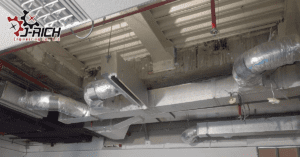
Indoor units are available in many styles and sizes — wall-mounted, ceiling-suspended, ceiling-concealed duct type, floor-standing cabinets, or cassette types — giving designers and owners flexibility to match both function and interior aesthetics. Additionally, VRV/VRF systems can support longer piping runs than conventional systems, allowing outdoor units to be installed far from indoor spaces (e.g., on distant rooftops) without sacrificing performance. This makes them highly adaptable to diverse architectural layouts.
6. Centralized Control Integration
VRV/VRF systems can be integrated into centralized control platforms, whether via a central remote controller or a Building Management System (BMS). This enables facility managers to monitor and control all AC units from one location — scheduling start/stop times, setting different temperatures for different zones, selectively switching units on/off, or restricting local user control. This adds both convenience and energy management efficiency for large buildings.

Limitations of VRV/VRF Systems
Although the VRV / VRF system offers many advantages, there are also some considerations or limitations to be aware of:
- High initial cost – The VRV / VRF system has a higher equipment price and installation cost compared to conventional air conditioners. Due to its advanced technology and complex components, the cost per cooling capacity (BTU) is significantly higher than that of split-type systems. Investors therefore need to prepare a larger budget for installing this system, unlike traditional split-type installations that may require less overall expenditure.
- Impact if the system fails – Since one outdoor unit supplies cooling to multiple zones simultaneously, if the central outdoor unit of a VRV / VRF system malfunctions, all connected areas will temporarily lose cooling at the same time. This creates a wider impact compared to a single split-type air conditioner breakdown. For this reason, users need to ensure regular maintenance and inspections to minimize the risk of unexpected downtime.
- Requires specialized technicians – The VRV / VRF system is more complex than standard air conditioners. Therefore, maintenance and troubleshooting should be handled by technicians or service teams with expertise in this specific system. General air-conditioning technicians who are familiar only with split-type systems may lack the specialized knowledge required for VRV / VRF. Users are advised to choose a service provider with proven experience and expertise in VRV / VRF systems to ensure reliable long-term performance.
How Does the VRV / VRF System Save Energy
One of the key reasons why many buildings are switching to VRV / VRF air-conditioning systems is their superior energy-saving performance compared to traditional systems. The main factor lies in the inverter compressors used in VRV / VRF systems, which can increase or decrease cooling capacity according to the actual heat load at any given time (as explained in the working principle above). This prevents unnecessary power consumption during periods of low cooling demand.
Moreover, the independent zone control feature allows operators to run air-conditioning only in occupied areas, while turning it off in unoccupied rooms. This is unlike older centralized systems, which often required cooling entire floors or even entire buildings simultaneously. As a result, during periods of lower heat load—such as evenings, nights, or when only part of the building requires cooling—the VRV / VRF system delivers even greater energy savings, significantly reducing electricity costs for the building.
Real-world usage data shows that VRV / VRF systems can reduce electricity consumption by approximately 30–40% compared to traditional air-conditioning systems in buildings of similar scale.
Although the initial installation cost of VRV / VRF is higher, it is widely considered a worthwhile investment thanks to its substantial long-term savings in energy expenses.
What types of buildings are VRV / VRF systems suitable for?
In general, VRV / VRF systems are suitable for buildings with multiple rooms, zones, or floors that require independent temperature control in each area. Examples of buildings where this system is commonly installed include office buildings, hotels (especially small to medium-sized hotels), large commercial buildings and shopping centers, as well as hospitals — all of which have numerous rooms and areas with varying usage at different times.
In addition, industrial facilities with multiple office areas or control rooms can also benefit from VRV / VRF systems, as they allow flexible temperature control in each section of the facility according to actual usage, reducing unnecessary energy consumption. Today, VRV / VRF systems are widely adopted in various types of buildings due to their superior performance and energy-saving capabilities compared to traditional air conditioning systems.

Comparison of VRV / VRF Air Conditioning Systems with Other Air Conditioning Systems
1. Comparison with Split-Type Air Conditioners
When comparing VRV / VRF systems with split-type air conditioning systems—which are commonly used in residences and small offices—several key differences emerge. A standard split-type air conditioner has one outdoor unit (compressor) for each indoor unit. In contrast, a VRV / VRF system can use a single large outdoor unit to support multiple indoor units simultaneously. This significantly reduces the number of outdoor units that need to be installed within a building (from many units down to just a few).
Therefore, buildings that require multiple air conditioners can save installation space and achieve a more organized, neat appearance when using a VRV / VRF system, compared to having numerous split-type units scattered around the building.
In terms of cooling performance and energy efficiency, while modern split-type air conditioners now often feature inverter technology that improves energy savings, VRV / VRF systems still hold an advantage in large buildings with multiple zones. This is because VRV / VRF systems are centralized and can automatically adjust cooling output to each room based on its actual heat load, effectively balancing the workload across compressors. In contrast, split-type systems operate independently—each compressor runs separately, and users must manually turn each unit on or off depending on room usage.
In other words, VRV / VRF systems can reduce cooling output for unused zones and increase it for occupied ones automatically, maximizing energy efficiency at all times. Split-type systems cannot share or transfer cooling loads between zones the same way VRV / VRF can. As a result, VRV / VRF systems are generally more energy-efficient, especially in scenarios with multiple rooms in use simultaneously or variable load conditions (e.g., daytime vs nighttime).
Regarding cost and maintenance, VRV / VRF systems have higher upfront equipment and installation costs compared to multiple split-type units, due to their advanced technology. However, in the long run, VRV / VRF systems tend to offer greater savings on electricity and overall maintenance costs in large multi-zone buildings. Maintaining numerous individual split-type units can be more complicated and requires checking multiple points throughout the building.
That said, if a split-type air conditioner fails, only the affected room loses cooling. But if the main outdoor unit of a VRV / VRF system fails, multiple rooms will be affected simultaneously. Therefore, regular preventive maintenance is crucial to avoid major disruptions.
In summary: Split-type air conditioners are suitable for smaller spaces or buildings with fewer rooms where budget constraints are the main priority. For larger multi-zone buildings that require high efficiency, centralized control, and convenience, VRV / VRF systems provide a far superior solution overall.
2. Comparison with Chilled Water Systems (Chillers)
For very large buildings or projects that require massive and continuous cooling capacity, a chilled water system (Chiller) is often the preferred solution. A chiller is a centralized air conditioning system that produces chilled water, which is then distributed throughout the building via pipes to Air Handling Units (AHUs) or Fan Coil Units (FCUs). In this setup, chilled water acts as the medium for transferring cooling energy, unlike VRF systems that deliver refrigerant directly to indoor units.
One of the main advantages of chiller systems is their ability to handle extremely large cooling loads efficiently. They are particularly suitable for buildings with vast open spaces and high occupancy density, such as large shopping malls, exhibition halls, or large-scale industrial plants, where VRF systems may not be sufficient to cover all areas effectively.
In addition, water-cooled chillers are highly energy-efficient when operating continuously at full load. In many cases, the Coefficient of Performance (COP) of chilled water systems can even surpass that of VRF systems, making them more suitable for very large-scale buildings that require 24/7 cooling.
However, chilled water systems come with significant limitations in terms of space requirements and complexity. Installing a chiller system requires dedicated space for large chiller units, a cooling tower (for water-cooled chillers) to reject heat, extensive chilled water piping, and pumps for distribution across the building. The system is highly complex, and maintaining water quality is critical to prevent scale, corrosion, and biological growth in the pipes. This results in higher maintenance costs and the need for specialized technicians.
By contrast, VRV / VRF systems are easier to install, as they use refrigerant piping directly between outdoor and indoor units—eliminating the need for cooling towers, large pumps, and massive piping networks. This makes VRV / VRF systems more compact and better suited for buildings with limited space or retrofit projects where upgrading from an old system is required. Moreover, VRV / VRF systems provide greater zonal flexibility, allowing independent temperature control in each room or zone through dedicated indoor units and controllers, unlike chillers that typically distribute cooling in larger zones via air ducts.
In summary:
For medium to large buildings, VRV / VRF systems are often the more practical choice due to easier installation, flexibility, and high energy efficiency.
For very large-scale buildings with massive, continuous cooling demands, chilled water systems remain the superior choice in terms of overall efficiency and cost-effectiveness.