How to Install Fire Sprinklers in Buildings: A Guide for Business Owners
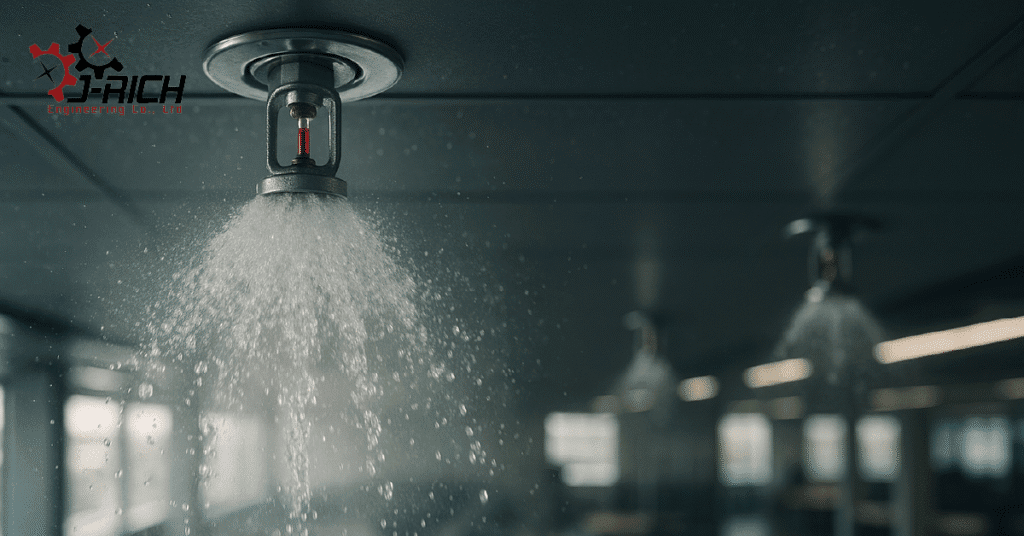
A fire sprinkler system is an automatic fire protection system that activates immediately when a fire occurs. It helps control the fire from the start, reducing damage to both lives and property. Many businesses, both in Thailand and abroad, choose to install them because they help minimize the risk of operational disruptions and provide assurance to customers and employees that the business prioritizes safety.
Why Businesses Should Install Fire Sprinkler Systems
- Safety for Lives and Property
Statistics from the NFPA show that buildings equipped with sprinkler systems can contain fires at their origin in over 97% of cases. This gives occupants more time to evacuate safely and reduces the risk of fire spreading to other areas. - Minimized Damage and Long-Term Cost Savings
Sprinkler systems use less water than fire hoses, limiting damage only to the affected area. They also help businesses resume operations more quickly after an incident. Additionally, many insurance companies offer premium discounts for buildings with sprinkler systems. - Compliance with Laws and International Standards
In Thailand, high-rise buildings, factories, and shopping malls are generally required to have sprinklers installed. Compliance with NFPA 13 standards and passing inspections ensures both safety and legal adherence for businesses. - Enhanced Reputation and Credibility
Installing fire sprinklers demonstrates responsibility toward employees and customers while building confidence among tenants, investors, and long-term business partners.
Things to Know Before Installing a Fire Sprinkler System
- Check applicable laws and standards
Such as NFPA 13, NFPA 1, and the requirements under the Building Control Act, to ensure the installation passes inspections and reduce the risk of fines or building shutdowns. - Assess building type and fire risk
- Light Hazard: Offices, schools
- Ordinary Hazard: Warehouses, general factories
- Extra Hazard: Chemical plants, fuel storage facilities
- The choice of system type and the number of sprinkler heads must correspond to these hazard levels.
- Prepare adequate water supply and pressure Large buildings should have a reserve water tank and fire pumps to ensure the system can operate continuously for at least 60–90 minutes during an emergency.
- Choose certified professionals and equipment Installation must be carried out by licensed contractors, and sprinkler heads, pipes, and valves should be UL or FM approved to guarantee functionality in the event of a fire.
Types of Fire Sprinkler Systems
- Wet Pipe System – Water is always present in the pipes and is discharged immediately when a sprinkler head activates.
Simple design, fast response, suitable for standard air-conditioned buildings. - Dry Pipe System – Pipes are filled with pressurized air or nitrogen instead of water.
When a sprinkler head activates, water flows in to fill the pipes. Suitable for cold storage or areas at risk of freezing. - Pre-Action System – Prevents accidental water discharge.
Requires both a fire detection signal and sprinkler head activation before releasing water. Commonly used in server rooms or museums. - Deluge System – All sprinkler heads are open, and water is released across the entire area simultaneously.
Used in high-hazard areas such as chemical plants or warehouses storing flammable materials.
Steps for Installing a Fire Sprinkler System
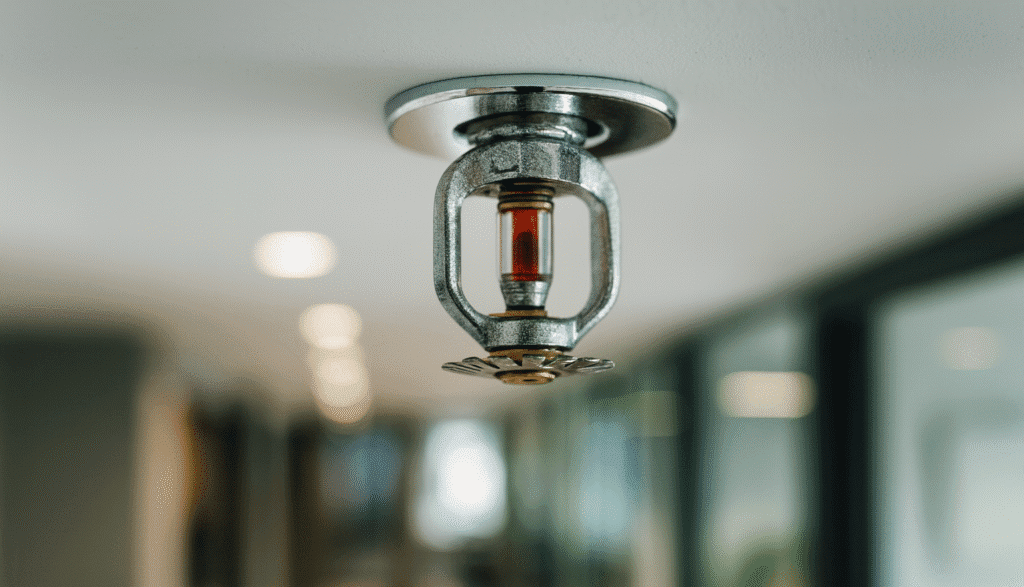
- Planning and Design
Have engineers survey the building, calculate water pressure, and determine sprinkler head placement to cover all risk areas. - Permits and Compliance Check
Prepare and submit design plans to the relevant authorities to ensure compliance with building regulations. - Installation of Piping and Equipment
Install sprinkler heads, main pipes, control valves, pumps, and backup power systems. - Inspection and Testing
Ensure pipes and sprinkler heads are unobstructed, secure, and safe. Perform pressure tests, fire alarm system tests, and full operational tests before handover, along with preparing an as-built drawing for future maintenance.
New Fire Sprinkler Technologies Worth Considering
- Smart Fire Sprinklers Utilize IoT and AI to detect fire more quickly, activating only at specific points to minimize water damage.
- Water Mist Systems Disperse high-pressure fine water mist, using over 80% less water than conventional sprinklers—ideal for areas sensitive to moisture.
- Integration with Smart Building Systems Work in tandem with smoke control systems and AI-powered cameras, enhancing safety across intelligent building infrastructures.
Costs and Cost-Effectiveness
- New Buildings: Approximately 35–105 THB/sq.ft. (~380–1,100 THB/sq.m.)
- Existing Buildings (Retrofit): Higher due to structural modifications
- Cost-Effectiveness: Reduces fire damage, lowers insurance premiums, and enhances long-term safety
Maintenance
- Inspect the system monthly and conduct in-depth inspections annually in accordance with NFPA 25.
- Always maintain an 18-inch clearance below sprinkler heads, and never hang objects on or paint over them.
Train employees on evacuation procedures and how to shut off the water valve in case of an emergency.
References
- Nonresidential Building Fire Trends (2009–2018), FEMA – [ usfa.fema.gov ]
- U.S. Experience with Sprinklers (2017–2021), NFPA – [ nfpa.org ]
- NFPA 13: Standard for the Installation of Sprinkler Systems, NFPA – [ nfpa.org ]
- ANSI/UL 199: Standard for Automatic Sprinklers, UL – [ shopulstandards.com ]
- NFPA 25: Standard for the Inspection, Testing, and Maintenance of Water-Based Fire Protection Systems, NFPA – [ nfpa.org ]