Reducing electricity costs in office buildings is not only about cutting business expenses — it also helps conserve resources and promotes a more environmentally friendly workplace. With electricity prices rising and the trend toward energy-efficient offices growing rapidly, business owners and office managers should understand practical techniques for reducing energy usage. These methods help lower electricity bills while strengthening the organization’s image as one that cares about sustainability.
This article introduces a variety of approaches to saving energy in office spaces — from simple everyday habits and smart automation systems to energy-efficient design strategies and long-term conservation policies that any office can implement sustainably.
Energy-Saving Techniques for Office Buildings
Starting to reduce electricity consumption at work is easier than most people think. Many energy-saving habits can be applied immediately in any office:
Turn off and unplug devices when not in use
Switch off lights and electrical equipment after use or during lunch breaks — for example, shutting down computers, monitors, and copiers when they are not needed. Unplugging devices that won’t be used for long periods also helps eliminate phantom power (standby electricity), which silently increases your bill. This simple habit reduces energy usage and extends the lifespan of office equipment.
Set the air conditioner to an optimal temperature
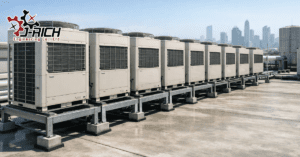
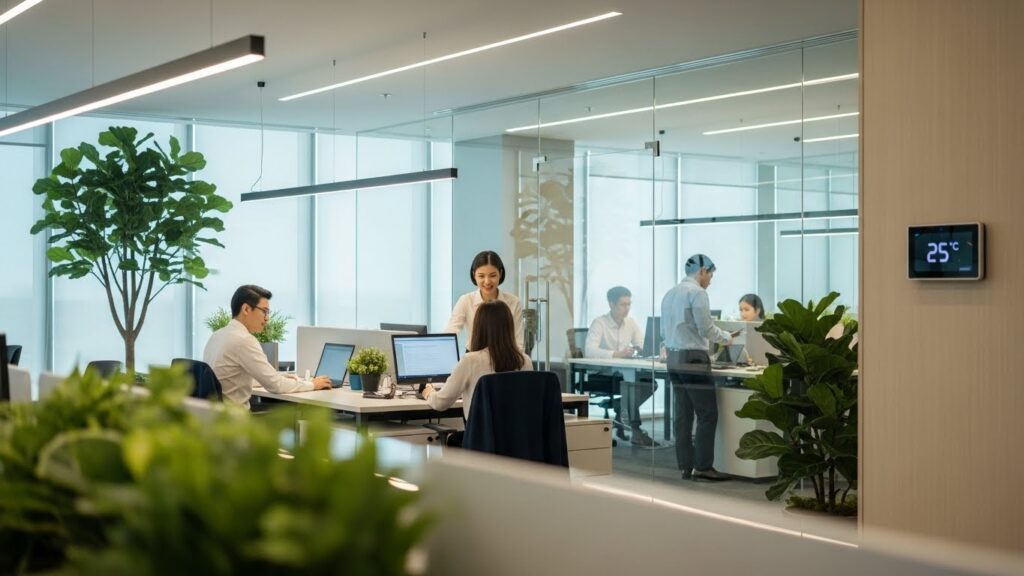
Air conditioners are one of the biggest energy consumers in office spaces. Set the temperature to around 24–26°C and use fans to improve air circulation. You will feel just as cool while consuming less electricity. Increasing the AC temperature by just 1°C can reduce annual energy consumption by several percent. Regular AC cleaning also ensures efficient performance without unnecessary power usage.
Use energy-efficient lighting and equipment
Switching from fluorescent or incandescent bulbs to LED lighting can reduce electricity use by up to 70%. Although LEDs may cost more upfront, they last longer and save more in the long run. Choose office equipment with Energy Label No.5 or Energy Star certification, such as monitors or inverter air conditioners, which consume significantly less power than older models.
Maximize natural light
Incorporate energy-efficient office design by taking advantage of natural daylight. Open curtains or blinds during the day to minimize artificial lighting. Arrange workstations where natural light is sufficient, and consider window films or blinds to reduce heat gain. Using natural light effectively not only cuts electricity usage but also creates a pleasant work atmosphere.
Smart Office Automation and Technology
Automation and smart systems help offices manage energy more efficiently and reduce unnecessary consumption:
Smart lighting and sensors : Install motion sensors in meeting rooms, restrooms, or low-traffic areas. Lights automatically turn off when no one is present. Smart bulbs can also adjust brightness based on outdoor lighting conditions or preset schedules.
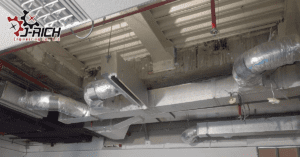
Automated air-conditioning systems : Smart thermostats or intelligent HVAC systems can adjust temperatures based on real usage patterns — increasing the temperature during lunch breaks or after work hours and lowering it before employees arrive.
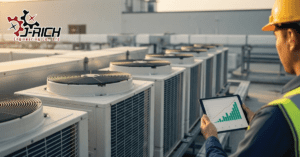
Building Management Systems (BMS) : Modern office buildings often use centralized Building Management Systems to control lighting, air conditioning, elevators, and more. A well-configured BMS can optimize energy usage and send alerts when certain areas consume abnormal amounts of power. Some automated systems can reduce overall energy use — especially for HVAC — by up to 40%, which is a significant saving for any business.
Energy-Efficient Office Design
Designing an office with energy efficiency in mind from the beginning helps ensure long-term savings:
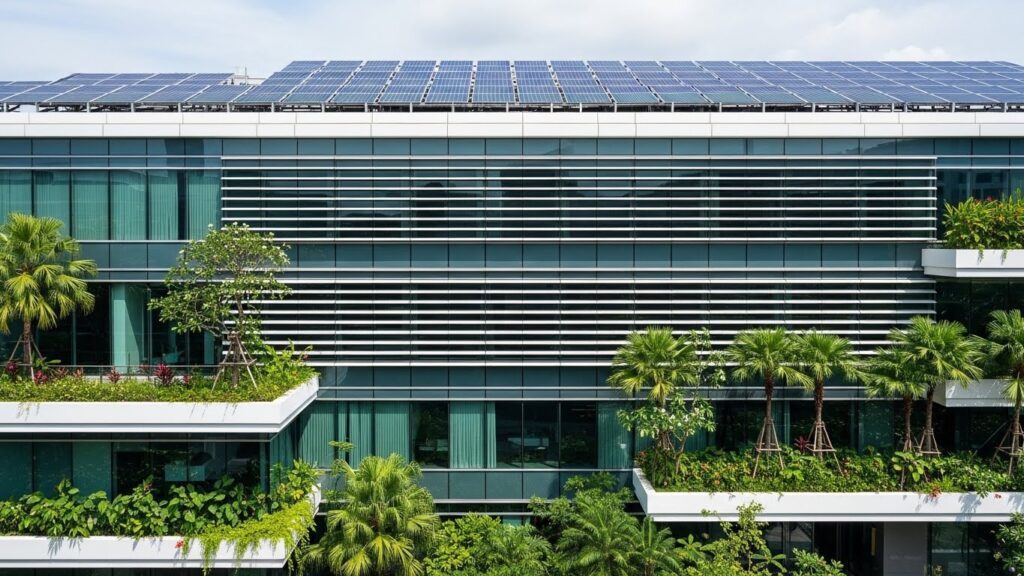
Passive Design : Use architectural designs that work with natural conditions, such as building orientation for natural ventilation, insulation materials that reduce heat transfer, and Low-E glass that reflects heat. This approach reduces the need for mechanical cooling.
Active Design : Install energy-saving systems and equipment such as LED lighting throughout the building, well-placed windows that provide light but minimize heat, and renewable energy sources like rooftop solar panels.
Preparing facilities like bicycle parking or EV charging stations also supports environmentally friendly employee behavior.
Combining Passive and Active design creates a truly energy-efficient office building.
Note: Lighting systems typically account for around 25% of total office energy consumption, making efficient lighting design a major contributor to energy savings.
Organizational Policies for Energy Conservation
Beyond equipment and technology, internal policies help build a long-lasting culture of responsible energy use:
Set a “turn off when not in use” policy : Encourage staff to turn off lights and devices when leaving a room or finishing work. Small reminders like stickers near switches saying “Have you turned it off today?” can increase awareness.
Promote awareness and engagement : Run internal Green Office campaigns, such as weekly energy-saving challenges between departments with small rewards. Share tips through emails or notice boards (e.g., taking stairs instead of elevators for short distances, unplugging coffee machines after use).
Set break-time and after-hours guidelines : Some offices turn off lights and AC for a full 1-hour lunch break. After work, staff or designated personnel should ensure that all lights and AC units are off, or rely on automated shutdown systems.
Monitor and support consistently : Management should actively support these initiatives — for example, sharing monthly energy reports so employees see the positive results of their efforts. Assign an internal “energy monitor” in each department to help maintain and encourage energy-saving behaviors.
Conclusion
Energy saving in office buildings is something every organization can start today and see real results — both short-term and long-term. Whether through simple habits like turning off unused lights, adopting smart automation systems, or investing in energy-efficient building design, every action contributes to reducing energy consumption and lowering electricity bills.
With clear policies and active employee participation, creating an energy-efficient office becomes an achievable and sustainable goal — a modern standard that benefits the business, the environment, and future generations.
แหล่งอ้างอิง
- What is an Energy-Efficient Building and What Systems Are Required? [sunnyemergencylight.com]
- Energy-Saving Devices for Offices [officeandtools.com]
- Did You Know? Smart AI-Driven Building Control Systems Now Reduce Energy Use [evpowerenergy.com]
- Energy Saving in the Workplace [moph.go.th]